The Yamakasi
Nine friends who shaped modern parkour. The Yamakasi were nine friends from Lisses whose training became the art of movement. Who they were, what the name means and their films.
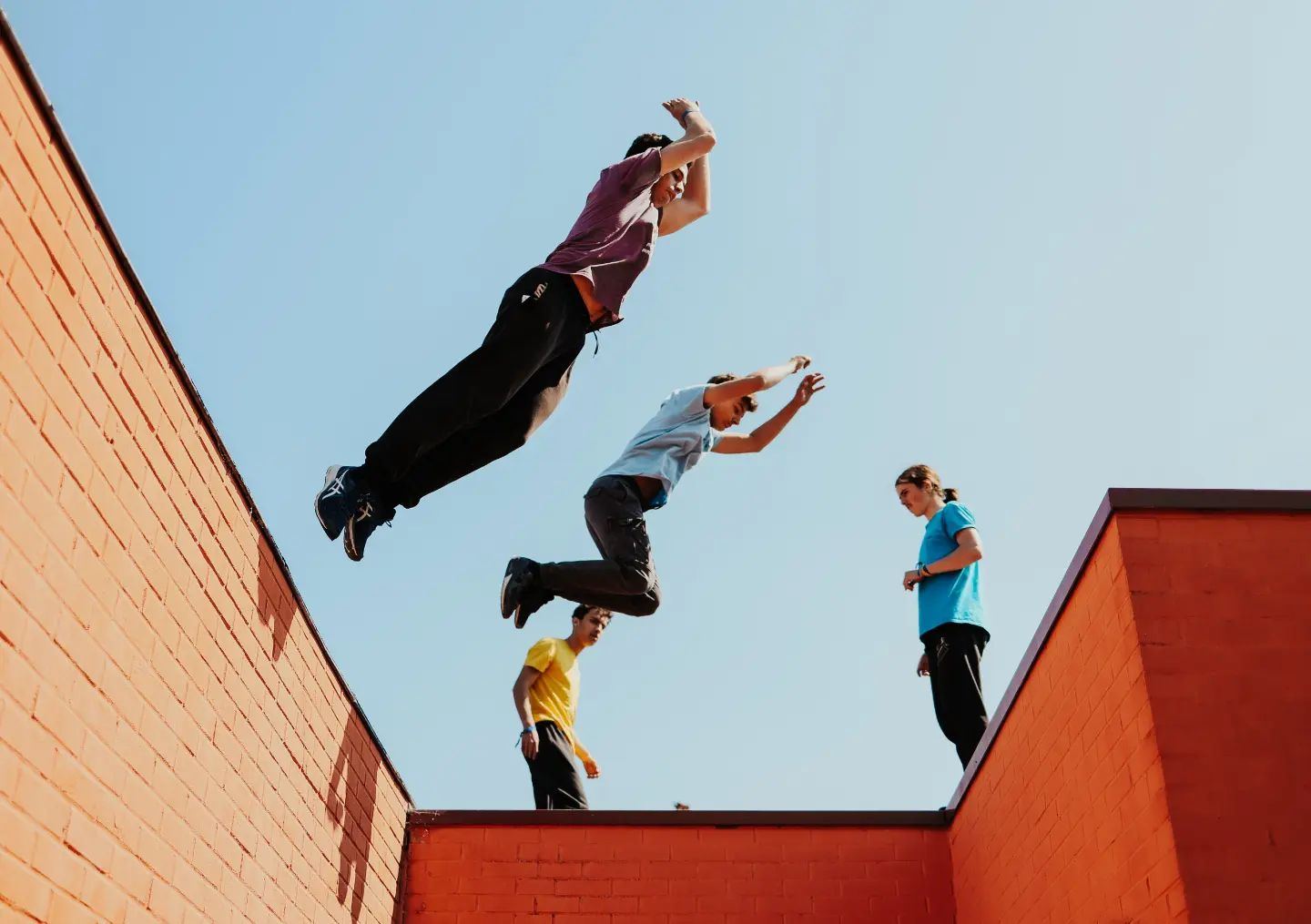
A Yamak federation gathering: Zeffff, CC BY-SA 4.0
Nine friends
The Yamakasi were a group of nine young men from Lisses: David Belle, Sebastien Foucan, Chau Belle Dinh, Williams Belle, Yann Hnautra, Laurent Piemontesi, Guylain N'Guba Boyeke, Malik Diouf and Charles Perriere. They came together in the mid-1990s and trained relentlessly in the streets and parks of their town.
Their name comes from Lingala, a language spoken in central Africa. Roughly translated, it means strong in body and spirit, a good summary of what they were trying to build in themselves.
The art of movement
The group called their practice l'art du deplacement, the art of movement. For them, it was not only about physical skill. They stressed values such as honesty, humility, respect and helping each other, and they believed real strength included being mentally steady and useful to others.
Training was famously demanding, but it was also patient. Members built strength and control over years, practising each movement low and safely before anyone tried it in a bigger setting.
Going separate ways
By the late 1990s the group split. David Belle and Sebastien Foucan left after disagreements about the direction and core values of the movement. Belle went on to promote parkour and act in films, while Foucan later developed the idea of freerunning. The remaining members carried on with the art of movement.
In 2001 a French feature film called Yamakasi brought several of the original members to cinema screens, playing characters who use their skills to help a sick child. It introduced millions of viewers to the idea of moving creatively through a city.
Their legacy
The Yamakasi helped turn a local training habit into a recognised discipline with its own culture. Schools and associations connected to the founders still teach the art of movement with a strong focus on gradual, coached progress.
Everything on this page is performed by trained professionals. Please do not try to copy it. If parkour inspires you, start at a proper parkour gym with qualified coaches.
Why the story still matters
The Yamakasi story is often told as a tale of daring, but the people who trained with them tend to talk about something else: discipline, friendship and responsibility. Older members looked after younger ones, and nobody was expected to attempt a movement before they had built the strength for it.
That culture of patience is the part of their legacy that modern parkour coaches work hardest to keep alive.

- A Yamak federation gathering: Zeffff, CC BY-SA 4.0
- David Belle: https://www.allocine.fr/personne/fichepersonne-93828/photos/detail/?cmediafile=2, CC BY-SA 3.0
Text written by Legendary Awesome.